The wrong agency burns your budget and sends weekly reports full of excuses. These seven questions, refined over 10+ years working with brands like Kiehl's, DIFF Eyewear, and Dr. Squatch, will cut through the pitch and tell you what you actually need to know.
Question #1: What is your agency's specialty?
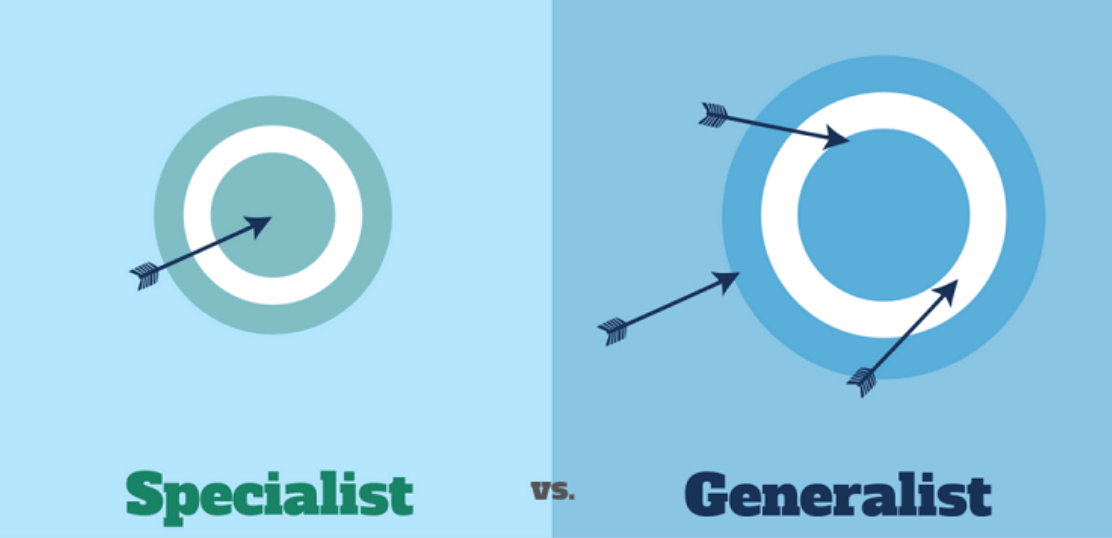
Most agencies call themselves "full service." That label should trigger skepticism, not confidence.
Digital marketing contains dozens of distinct subspecialties: CRO, paid social, SEO, email, content, influencer, and SMS. Each one requires deep, dedicated expertise, and an agency that claims mastery across all of them almost certainly has mastery in none.
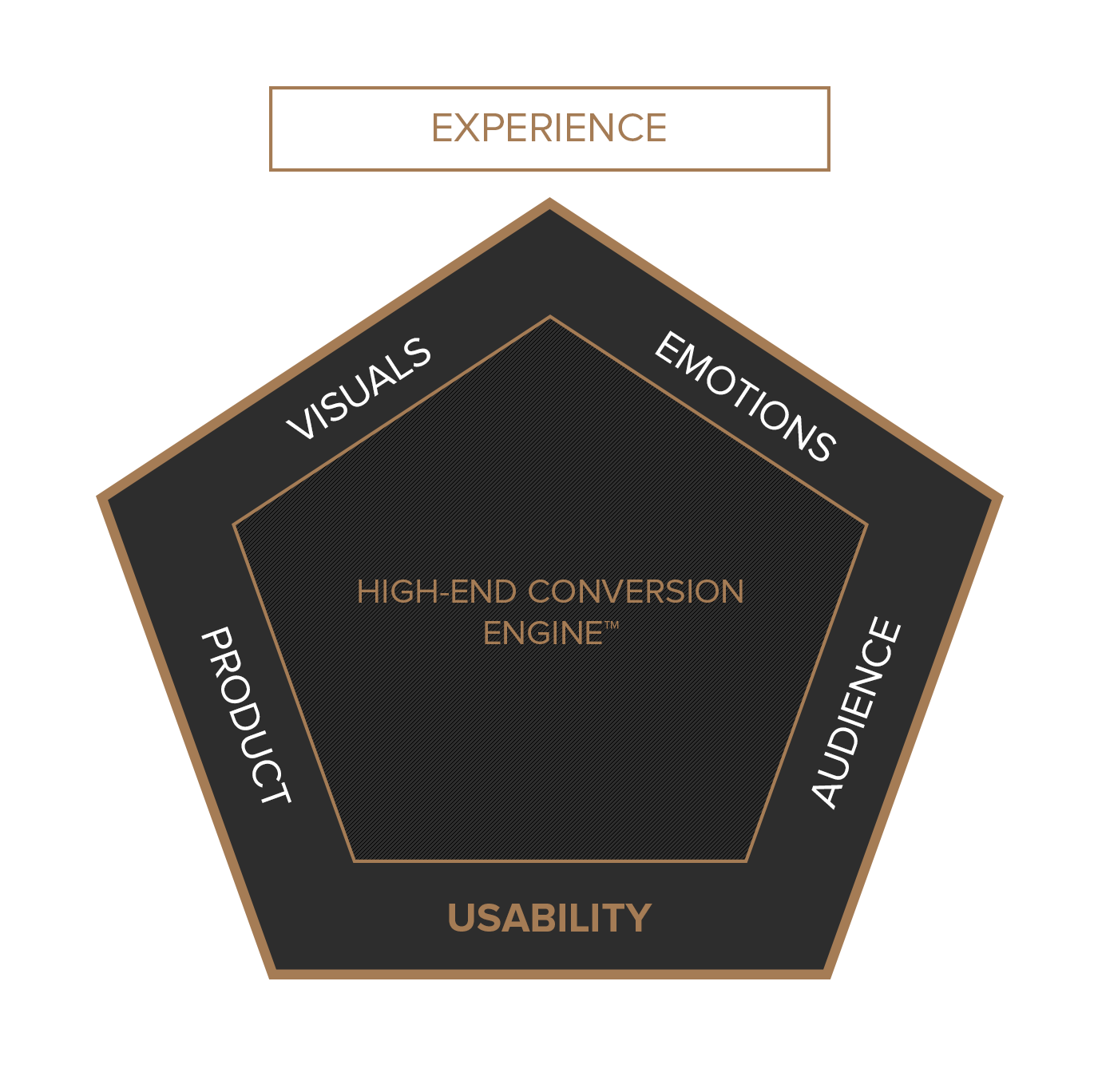
Conversion optimization alone spans qualitative research, analytics, usability testing, A/B test design, persuasive copywriting, and conversion-focused design. That's a full discipline. A generalist team dabbling in it will cost you more than it earns.
Decide what your primary constraint is before you start talking to agencies:
Low conversion rate or poor landing page performance, hire a CRO specialist
Weak organic visibility, hire an SEO or content agency
Paid media ROI declining, hire a performance marketing agency with category experience
Brand-new to digital entirely, a generalist can help you build a strategy, but set a clear exit point
If you know what's broken, hire the specialist who fixes exactly that. Don't pay for a full orchestra when you need a surgeon.
The structural reality agencies won't show you
U.S. DTC ecommerce continues to grow rapidly, representing an increasing share of total retail ecommerce. The 8-9 figure brands winning in that environment aren't working with generalists. They're running dedicated CRO programs, specialist paid teams, and channel-specific creative studios.
Question #2: What makes you better at luxury and fashion digital marketing than agencies that aren't luxury-focused?
Mass-market tactics fail luxury brands. This isn't opinion; it's a documented pattern.
Ford's Premier Automotive Group acquired Jaguar, Aston Martin, Land Rover, and Volvo in the 1990s, then applied Ford's mass-market operational and marketing playbook to all of them. PAG bled losses for years, and Ford sold off every brand by 2008. The methodology that built a mass-market giant destroyed the premium portfolio.
The same dynamic plays out constantly in agency work. A performance marketing agency that scales DTC supplement brands through aggressive discounting and urgency tactics will damage a luxury fashion brand's positioning within months.
Luxury buyers don't respond to scarcity countdowns and 40%-off banners. They respond to exclusivity, craft, and brand authority, and your agency needs to understand that distinction at a process level, not just claim they do.
SplitBase's 3Ps Methodology (Patterns, Perception, Proof) is designed specifically for premium DTC brands at this scale. The Perception stage is the strategic filter that separates conversion wins worth implementing from conversion wins that would erode brand equity. Ideas that test well but conflict with the brand's positioning, voice, or category authority get killed before they reach the testing queue, regardless of their conversion potential.
That brand-safe CRO discipline is what makes the methodology work for luxury fashion, lifestyle, and beauty brands where mass-market tactics actively destroy value. For the full methodology breakdown, see [the CRO Audit article].
Ask any agency you're evaluating to show you specific work for luxury or premium brands. Ask what they did differently for those clients versus their mid-market accounts. Vague answers mean they haven't thought about it.
Question #3: How do you determine what changes to make on an ecommerce website to increase sales?
The wrong answer: "We'll look at the design and apply our experience."
The other wrong answer: "Here's a list of best practices we follow."
Both approaches produce changes based on opinion, and opinion-driven redesigns regularly hurt conversion rates (sometimes dramatically) because they optimize for what the team finds aesthetically pleasing rather than what removes friction for actual buyers.
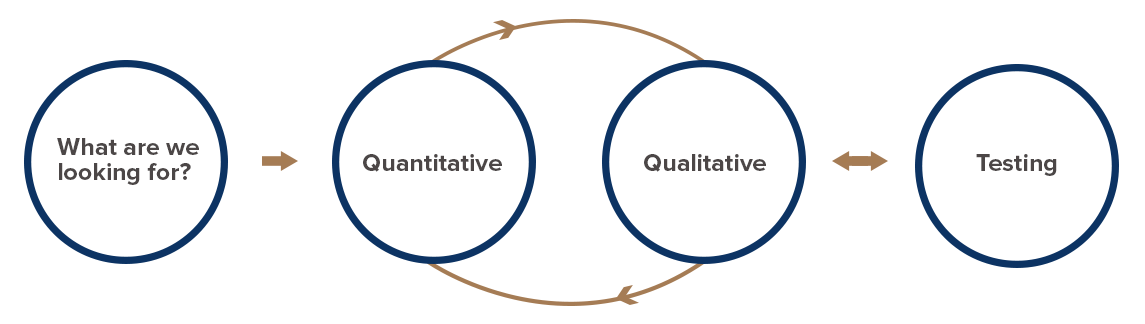
The right answer involves data, both qualitative and quantitative. That means:
Analytics review to identify where traffic drops off and where revenue is being lost
Session recordings and heatmaps to see actual user behavior
Usability testing to surface friction points users can't articulate in surveys
Qualitative research (polls, surveys, customer interviews) to understand objections and motivations
A/B testing to validate changes before rolling them out site-wide
Design by committee, where changes get made because someone on the team "thinks it looks better," is one of the most expensive mistakes in ecommerce. Without a research-backed hypothesis and a controlled test, you're guessing with your revenue.
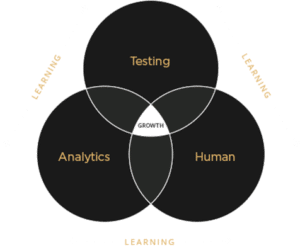
Look for agencies with a documented methodology, such as the Testing Trifecta: three parallel research layers (behavioral quantitative data, voice-of-customer qualitative data, and resistance/UX friction analysis) that ground every test in evidence before launch. A process doesn't constrain creativity. It ensures creativity is directed at the right problems.
If you're evaluating agencies and want a clear point of comparison on what disciplined CRO methodology actually looks like, request a free proposal. We'll walk through SplitBase's 3Ps Methodology against your current situation so you can evaluate any agency you're considering against a real benchmark.
Question #4: What type of research will you conduct to understand my target market?
Two red flags to watch for immediately.
First: any agency working on your website, messaging, or marketing that doesn't plan to conduct customer research. Walk away. You cannot write copy that converts, design flows that reduce friction, or build offers that resonate without understanding what your customers actually want, fear, and object to.
Second: agencies that build customer personas from internal brainstorming sessions. Personas built without real customer input are fiction. They reflect the team's assumptions, not your buyers' reality, and acting on them is worse than having no personas at all.
Voice of Customer research, capturing the exact language buyers use to describe your products and their problems, is one of the highest-ROI research activities in ecommerce. Across SplitBase's client work in premium DTC, VoC research has consistently produced meaningful sales lifts when integrated into PDP copy, landing page hierarchy, and offer framing.
The agency you hire should be conducting qualitative surveys, on-site polls, usability tests, support log analysis, customer interviews, and (if you have retail) in-store observations. That's the only way to understand the emotional triggers that actually drive purchase decisions for your specific customer.
Question #5: What's your process for growing our online sales?
If an agency can't describe its process clearly in under five minutes, they don't have one. "Every client is different" is not a process. It's a way of avoiding accountability.
The best agencies have documented methodologies that produce repeatable results across different clients. The process doesn't dictate what tests to run or what copy to write. It defines which research tools to use, in what sequence, and how decisions get made. That structure is what separates consistent performers from agencies that occasionally get lucky.
Before recommending any solution, a good agency should help you diagnose whether your primary constraint is conversion rate or traffic volume. Spending more on paid ads when your conversion rate is broken just amplifies the leak, and getting that diagnosis right first is what separates a strategic partner from a vendor.
SplitBase's 3Ps Methodology governs how research, hypothesis development, and test execution are sequenced at scale. Patterns research surfaces what's worth testing through three parallel layers: behavioral quantitative data, voice-of-customer qualitative data, and resistance/UX friction analysis. Perception filters those findings through brand and competitive positioning so conversion wins don't erode brand equity. Proof validates only what survives stages 1 and 2, because every test is both a business decision and a research instrument that compounds learning.
For 8-9-figure premium DTC brands, this brand-safe CRO discipline delivers conversion lifts that don't erode the brand's category positioning over time.
Ask to see the process document. Ask for a walkthrough. If they can't show it to you, it doesn't exist.
Question #6: Are you tool-agnostic?
Some agencies push clients onto specific platforms (particularly A/B testing tools) because they receive referral commissions from those vendors. That's a conflict of interest that costs you money.
Enterprise tools like Optimizely Web Experimentation or Adobe Target carry significant price tags, and most ecommerce brands don't need them. An 8-9-figure DTC brand running 3-5 tests per month can achieve full statistical validity with tools like Intelligems, which are purpose-built for ecommerce testing at this scale. An agency steering you toward an expensive platform you don't need is optimizing for their margin, not your results.
Your agency should evaluate tools based on your traffic volume, testing velocity, and technical setup, then recommend the ones that best fit. If they're already married to one platform before they've assessed your situation, that's the answer to your question.
Question #7: Can you guarantee an increase in website conversions and sales?
Any agency that guarantees results is lying to you. That's not cynicism. It's math.
Conversion rates are affected by hundreds of variables outside any agency's control: algorithm changes, competitor promotions, supply chain disruptions, macroeconomic shifts, and negative press. A Google core update can crater organic traffic overnight. A viral negative review can tank conversion rates for weeks. None of that is the agency's fault, and no honest agency would claim otherwise.
What a good agency can guarantee is process rigor: that tests are designed correctly, that research is conducted thoroughly, and that decisions are made from data rather than gut feel. That's the only honest commitment available.
Industry research on DTC marketing channels shows that social commerce and influencer marketing now drive significant portions of DTC conversions, but those numbers shift constantly as platforms change their algorithms and audience behaviors evolve. Any agency promising you a specific outcome in that environment is selling you something they can't deliver.
Frequently Asked Questions
How do the seven questions above apply differently to luxury versus mass-market DTC brands?
Question #2 is the central pivot. For mass-market DTC brands, the questions about specialty, methodology, research, process, tools, and outcome honesty all matter, but the luxury-specific question (why mass-market tactics fail premium positioning) is the one that separates agencies that will protect your brand equity from agencies that will gradually erode it.
Mass-market brands can afford a wider range of agency partners. Luxury and fashion brands at an 8-9 figure scale cannot, because the downside of working with a mass-market agency on a premium brand isn't suboptimal results. It's brand damage that compounds beyond the engagement.
How does the 3Ps Methodology specifically differ from a generic CRO process when applied to luxury and fashion brands?
The Perception stage is the differentiator. Generic CRO processes test what testing tools say can be tested. The 3Ps process filters research findings through brand and competitive positioning before anything reaches the testing queue.
For luxury brands, this matters because many tactically valid CRO tests would damage brand equity if implemented: aggressive scarcity messaging, discount-led offer framing, urgency countdowns, prominent percentage-off badges. A generic CRO program would run those tests, identify which lift conversion, and ship them. The Perception filter kills those tests before they reach Proof, regardless of their conversion potential.
That's the brand-safe discipline that separates 3Ps from generic CRO.
How should we structure the agency relationship alongside our internal team at an 8-9 figure scale?
At an 8-9 figure scale, most fashion and luxury brands run a hybrid model: internal CRO capacity for execution and operational management, agency for strategy, research methodology, and testing roadmap.
The agency brings accumulated cross-client expertise on what works specifically in the luxury and fashion vertical. The internal team brings business context and faster iteration on tactical decisions.
The brands that get this wrong typically either rely entirely on an agency (creating dependency and limited internal learning) or try to build everything in-house before they have the operational maturity to sustain it.
How do you handle test velocity and statistical significance for luxury brands with lower traffic volumes than mass-market DTC?
Lower traffic at the luxury tier requires more methodological discipline, not less. Two operational disciplines matter most: longer test durations (a minimum of 3-4 weeks regardless of when sample size targets are reached, to account for traffic cycles) and stricter prioritization (testing only hypotheses that survived Patterns and Perception filtering rather than running broad portfolios of speculative tests).
The validity threats compound at lower traffic volumes. Extreme early readings normalize less reliably, and false positives become more expensive per shipped change. For the deeper treatment of validity discipline, see [the Validity Threats article].
What happens after a test wins?
A winning A/B test is the beginning of the work, not the end. The insight from that test should inform your next hypothesis, your product pages, your ad creative, and your email flows.
Ask agencies how they document and distribute learnings across the organization. Agencies that treat each test as a standalone project rather than a compounding knowledge base are leaving most of the value on the table.
8-9 figure DTC brands that build systematic testing programs consistently outperform those running ad hoc experiments, because the learnings stack. For the deeper treatment of how to operationalize this at scale, see [the A/B Testing Process article].
How do you evaluate whether an agency has genuine luxury and fashion category expertise versus surface-level claims?
Three specific signals worth checking.
First, ask for named luxury or premium brand work and the strategic decisions made for those clients specifically. Vague answers about "premium positioning" or "luxury aesthetic" reveal surface-level understanding.
Second, ask how the agency handles tactical recommendations that conflict with brand positioning. The answer should describe a clear process for filtering tactical wins through strategic constraints, not a willingness to run whatever tests show statistical significance.
Third, ask what they would refuse to do for a luxury brand even if it would lift conversion. Agencies with real category expertise can name specific tactics they would decline. Agencies without it cannot.
How long should it take an agency to deliver meaningful results for a luxury or fashion brand?
Two to three months for the first test results, with compounding revenue impact typically visible at the 6-month mark and accelerating through 12-18 months.
Agencies promising dramatic lifts in the first 30 days for luxury or fashion brands are either cherry-picking metrics, running flawed tests, or making tactical recommendations that will damage brand equity.
The compounding model, where each tested hypothesis builds the learning library that informs increasingly higher-leverage tests, is what produces durable results in this vertical. For a deeper treatment of what compound testing programs look like operationally, see [the A/B Testing Process article].
What's the most common mistake brands make when hiring a fashion or luxury digital marketing agency?
Hiring based on portfolio aesthetics rather than methodology. Luxury and fashion brands are particularly vulnerable to this because the visual quality of agency case study presentations correlates poorly with the methodological rigor that actually produces results.
A beautifully presented portfolio can mask weak testing discipline, a lack of documented process, and a track record of tactical wins that don't compound. The questions above are designed specifically to surface the methodological rigor underneath the portfolio presentation, which is the only signal that reliably predicts agency performance over a 12-month engagement.
Hiring the wrong agency is expensive in two ways: the fees you pay them, and the revenue you lose while they figure out what they're doing. These questions compress that risk significantly.
You're not looking for an agency that sounds impressive in a pitch. You're looking for one with a documented process, genuine category expertise, and the intellectual honesty to tell you what they can't control. That combination is rarer than it should be, which is exactly why these questions matter.
If you're running an 8-9 figure fashion or luxury DTC brand evaluating digital marketing agency partnerships, we can help. Learn more about our CRO services.


.jpeg)



.png)