
EPISODE
72
How Fire Department Coffee Built a Mission-Driven Ecommerce Brand With Luke Schneider
with
Luke Schneider, Founder and CEO of Fire Department Coffee
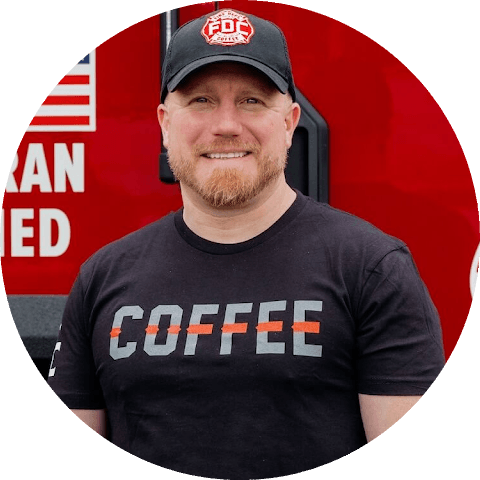

Luke Schneider is the Founder and CEO of Fire Department Coffee, a veteran-owned coffee company he launched in 2016 in Rockford, Illinois. A US Navy veteran and former firefighter-paramedic, Luke built the brand to combine his passion for high-quality coffee with a mission to support firefighters and first responders. Under his leadership, the company has grown from a small roasting operation into a nationally distributed brand. Luke also founded the Fire Department Coffee Charitable Foundation, which provides aid and resources to sick or injured firefighters and first responders.


Here’s a glimpse of what you’ll learn:
- [2:29] Luke Schneider discusses purpose-driven branding and his impetus for founding Fire Department Coffee
- [4:08] How to build a mission-driven culture through community, storytelling, and social media content
- [6:31] Authentic brand positioning and standing out in a crowded coffee market
- [8:21] Hiring firefighters and embedding community values into the team
- [9:43] The challenges of running a mission-driven business while managing growth and operations
- [13:12] Setting impact goals and giving back through the Fire Department Coffee Charitable Foundation
In this episode…
Building a successful brand takes more than a great product — it requires a mission that resonates with both your team and your customers. When a company’s purpose goes beyond profits, it can inspire loyalty, strengthen culture, and create a powerful brand identity. But what does it actually look like to build a purpose-driven business that fuels real growth?
Luke Schneider’s answer begins with clarity of mission. As a former firefighter-paramedic turned entrepreneur, he explains how aligning a company’s purpose with a real community need can create deep authenticity and long-term motivation for teams. Rather than treating purpose as a marketing tactic, he emphasizes embedding it into daily operations, from hiring people aligned with the mission to creating content that reflects the community being served. Luke also highlights the importance of consistency: setting clear impact goals, integrating charitable initiatives into the company’s budget, and staying intentional about how every initiative ties back to the mission. Ultimately, he explains that a purpose-driven brand works best when it’s genuine, deeply rooted in the founder’s values, and supported by a team aligned around the same goal.
In this episode of Minds of Ecommerce, Raphael Paulin-Daigle sits down with Luke Schneider, Founder and CEO of Fire Department Coffee, to discuss building a purpose-driven ecommerce brand. Luke discusses defining a mission-driven brand, embedding purpose into company culture and hiring, and setting measurable goals for charitable impact while scaling a growing business.
Resources mentioned in this episode:
- Raphael Paulin-Daigle: LinkedIn | X
- SplitBase
- Luke Schneider on LinkedIn
- Fire Department Coffee: Website | Instagram | Walmart
- Fire Department Coffee Charitable Foundation
- “The 3 Big Affiliate Marketing Mistakes Ecommerce Brands Make (And How to Fix Them) With Greg Rollet” on Minds of Ecommerce
Quotable Moments:
- "Having purpose with clarity means working toward something greater than just sales — our mission truly defines our brand."
- "It wouldn't feel right to create a brand around Fire Department Coffee and not serve our fellow firefighters in a bigger way."
- "Do it because that's what you want to do, not just to try to do sales."
- "You're only as good as your team is; having a clear mission with clear goals is very impactful."
- "We set it in our budget to know our goal is to give back, and we always ask what more we can do."
Action Steps:
- Define a clear mission for your brand: A well-defined purpose gives your team direction and helps customers emotionally connect with what your company stands for.
- Embed your mission into daily operations: When your purpose shows up in hiring, content, and decision-making, it becomes authentic rather than just a marketing message.
- Build a community around your brand: Engaging directly with a specific audience through content and shared values strengthens loyalty and accelerates organic growth.
- Set measurable impact goals: Including charitable or mission-related targets in your business planning ensures your purpose stays aligned with your company’s growth.
- Stay consistent with your values as you scale: Maintaining focus on your mission during growth builds trust with both employees and customers over the long term.
Sponsor for this episode…
This episode is brought to you by SplitBase.
At SplitBase, we design, test, and manage high-converting landing pages and on-site experiences for fashion, luxury, and lifestyle ecommerce brands. Our optimization program pinpoints exactly where your store is losing money most, and then we help you fix that.
The result? Increased conversions and profits for our clients.
With our team of conversion optimization specialists, performance marketers, and conversion-focused designers, we've got your back when it comes to testing and optimization.
Request a proposal on SplitBase.com today, and learn how we can help you get the most out of your marketing spend.
You can find us on LinkedIn, Twitter, and Facebook. Don’t miss out on our exclusive podcasts at Minds of Ecommerce.
Episode Transcript
Intro: 00:06
Welcome to the Minds of Ecommerce podcast, where you'll learn one key strategy that made leading ecommerce companies grow exponentially. We cut the bullshit and keep the meat in a 15-minute episode. Founders and executives take us through a deep dive of a strategy so you get to learn and grow your online sales. In the last episode, we heard from Greg Rollet, Head of Growth at Grommet. And we talked about mistakes brands are making with affiliate and partner programs.
Now today, get ready. I'm chatting with Luke Schneider, founder of Fire Department Coffee, and we'll be talking about how to build a team driven by purpose and with a clear mission to drive growth. And I think this is an excellent conversation to have at the start of the year. So let's get started. Let's dive into it.
And I'm your host, Raphael Paulin-Daigle and I'm the founder of SplitBase. This is Minds of Ecommerce. Now this episode is brought to you by SplitBase. At SplitBase we help leading eight and nine-figure brands such as Dr. Squatch, Hyperice, and Amika grow through customer-focused conversion optimization programs. We figure out exactly where your website is losing money and then, well, we help you fix it.
The result? You get an increased conversion rate, higher AOV, and of course more money, which in returns allow you to scale advertising profitably. We've been at it for over a decade and can help you manage CRO from A to Z. So go to splitbase.com today to learn how we can help you get the most out of your marketing spend. And to request your free proposal.
All right, Luke, welcome to the show. Thank you so much for being here.
Raphael Paulin-Daigle: 01:49
Thank you. Thanks for having me. I appreciate it.
Luke Schneider: 01:51
Yeah. Now, as you know, this podcast is all about getting deep, right? And dissecting one key growth strategy so our listeners can get the most value right away. Now, in your case, I know you've grown an incredible brand by being very purpose-driven and kind of rallying up your team around that and your customers even I would say, right. So can you just define it because I think like so many people have a different conception of like, what is a purpose-driven brand?
What it means to have a clear mission. I think it might be a bit vague sometimes. So I'd love to know in your definition, in your case, what does that mean?
Raphael Paulin-Daigle: 02:29
Yeah, for Fire Department Coffee and for myself and my team, it means having purpose with clarity that we're working after. So, you know, when we founded Fire Department Coffee or I founded Fire Farm Coffee in 2016, I was a firefighter paramedic. I realized there was a big need for sick and injured firefighters, and I was able to combine my passion for the craft of coffee with something greater and supporting our fellow firefighters. So that really drove me, you know, that I felt like not only was I doing something I love by crafting high quality coffee, but I was able to give back and serve my fellow firefighters. And so that allows me to really dig deep in times that are challenging.
And when the team sees the mission and the purpose and they have clarity behind what that is, it drives the team as well to, to push forward something greater than just sales because sales and profitability are needed to grow and scale. But, our mission really defines our brand.
Luke Schneider: 03:37
Can you tell me more about how you go about building such a culture? Because I think it's easy. Like I've seen so many shades of this, right? There are some brands that are just like, we're purpose driven, we give X, you know, amount to charity, and then that's kind of where it stops. Then there are some that really live and embody kind of that as well.
And I think that's where you stand. But I'd love to hear some concrete examples of how that mission is embedded into your culture and in your day to day.
Raphael Paulin-Daigle: 04:08
Yeah. So when I started Fire Department Coffee, I was still an active firefighter-paramedic for the city of Rockford. I had a community around me that was the fire service community, and firefighters drank a lot of coffee. And so I knew that I had a community that resonated with what we were doing and that we can grow and grow that community. So we did a lot of that through content, and we did a lot of social media content, building a large social community and online community.
And we always want to resonate with everyone so that if, if you're not a firefighter, you can still relate and, and see some of the humor, a lot of our content is, is humorous, but a real concrete example would be when we started Fire Department Coffee, I had a firefighter who reached out and he sent a video where he was taking some steps with crutches. And I said, how can we support you? And he said, just wanted to share some good news with a bad story. And he was paralyzed from a tree that fell on him in a wildland fire. And I got to know him and we were able to support him through our mission, but more so like I realized it was eye opening.
There's a firefighter that's part of this family, you know, this brotherhood and sisterhood that people hear about in, in the military and the fire service. You live together, you work together, you eat together, you do a lot of things together. And when you're sick or injured, you're no longer able to do that. So there was a big need there. And as firefighters, we see that unfortunately firsthand.
Very often a lot of firefighters, you know, are at higher risk of cancer. There's a lot of need for mental health. And then and then you have your injuries, whether it's burns or crush injuries, there's a lot of things that firefighters are exposed to, and just being a part of that community and seeing it firsthand and being able to bring coffee into that to really drive our mission and, and fill that need that is there to support our fellow firefighters. Yeah. It was just real life examples of working with people that are dealing with things and knowing people in the community that are dealing with things, and we wanted to be there for them and support them through our mission.
Luke Schneider: 06:31
Amazing. I'm curious here. I do think that there is a marketing lesson that I'd like people to take as well, right? Because what you're describing here is not just, hey, we're giving a small percent of our profits. You're really, you know, embodying the cause through your content, through your logo, through your brand, through how you talk with people, what it does.
And what I'm kind of seeing is obviously it does create something very unique about you, right? Like there's a million of other coffee brands there. How many are like the Fire Department Coffee brand, the one that supports the firefighters, right. There's you. Right.
And I'm sure there's not a ton more. If there's others, but it really creates something unique. Whereas, you know, if I think of the brands that, you know, are just, oh, we're giving a portion, you know, of our profits to charity and that's kind of where it ends. And they never talk about the rest, right? Those brands are easily forgettable.
There's still nothing unique about them that customers will remember for. It just becomes a bit like this marketing thing. But you create a unique brand and positioning. And I think that's very, very interesting because it's also very authentic. You can't fake it.
You're an ex-firefighter, right? Like, so I'd love to know. Obviously it does create this big advantage from a brand and marketing front. I'm curious to hear. You know, when it comes to growing your team, for example, and hiring people.
Are you, you know, using kind of X firefighters as, as a funnel for potential for. For new employees? How does that translate into your hiring process?
Raphael Paulin-Daigle: 08:21
Yeah. So multiple team members are firefighters. We have actually a few other shareholders that are firefighters. One of them, Jason Patton, leads our social media content. He's still an active full-time firefighter.
So thank you for those kind words. This is our community. We are embraced by it. A lot of our team members are still active firefighters. And it's a community that we're deeply embedded in.
So it wouldn't feel right to create a brand around Fire Department Coffee and then not serve our fellow firefighters and give back in a bigger way than just just roasting high quality coffee.
Luke Schneider: 09:02
I'm curious about the kind of challenges, right? Obviously, at the end of the day, you are still a for profit enterprise. And what type of challenge does that create? Because I think some people think of it like charity or being like a mission driven enterprise. At one point, I think some people kind of blurred a line and, and felt like, oh, taking profit from that is unfair or something.
Those are things we've heard, right? We've all heard those kinds of things. At the end of the day, you're still a business and you're doing good, which is a great bonus. But what are some of those challenges that you have faced by being such a mission-forward enterprise while still being obviously a for profit enterprise?
Raphael Paulin-Daigle: 09:43
Yeah, just, you know, I would. I don't know if it's been a challenge on that front. Just staying true to the mission, staying true to the brand, continuing to, you know, build things around it. So like we have our fire department clubs, we do a, we do a fire department each month that we give back to. And just we also have a disaster relief fire truck that deploys to communities in times of disasters where we're serving the first responders during those incidents as well as the community. So it's just being very intentional about what we're doing and making sure that we're, we're doing what we say we're going to do and making that the forefront of our, of our mission and staying focused on that and not losing sight of it.
Outside of that, I think, you know, as an emerging brand, we, we, you know, have a lot of similar challenges. There's a lot of other emerging brands of, you know, learning, growing, managing, managing inventory while managing growth, you know, balancing cash flow, all those things that a lot of a lot of emerging brands also deal with. But as far as our, our brand and our mission, just staying focused on that and keeping that at the forefront, right?
Luke Schneider: 10:59
You started this brand with this mission. So inherently it's very authentic to that mission and everything you do. You've been able to kind of tie it back. Do you think of an existing brand that did not start with that mission? Do you think there's an opportunity for those brands to be a bit more mission-driven in the way that you are?
Or does it need to come from the first days?
Raphael Paulin-Daigle: 11:29
I think brands always evolve and adapt. So I think, you know, whatever is best for that brand. There's no one-size-fits-all, but learning, growing, and adapting. And also, you know, don't do, don't make it a mission just to try to do sales. Do it because that's what you want to do.
And for us, that's, that's been important is just, this is, this is in our culture, it's, you know, service, teamwork. These are things that just are ingrained in what we do and the work we do. Can't do it without your team. So that's something I realized in the military and the fire service is, if you're, you're only as good as your team is. And so having a clear mission with clear goals has been, you know, very impactful for Fire Department Coffee.
But I am always cautious to give advice to other brands because every, every brand is different. But I would say if that's on their heart and that's what they want to do. And it's not uncommon for brands to change and evolve, even if it's, you know, post launching.
Luke Schneider: 12:45
You, you talked about goals briefly. I'm curious, obviously, you know, you have goals in terms of growing the brand. You've got, you know, monetary goals. But when you have a mission like that, do you also have impact goals looped into those objectives? How do you, you know, keep track or measure or decide what type of impact you want to create from a goal standpoint?
Raphael Paulin-Daigle: 13:12
Yeah, we set it like that in our budget. So we set it in our budget to know here's, here's what our goal is to give back. And we just stay focused on that. And, and always, what can we do more? How can we layer more things?
What, what are we doing that can tie back to the mission or support the mission, not just fuel our growth and, and our brand, but how can it tie back to the mission? Because our brand is extremely tied to our mission. We started the Fire Department Coffee Charitable Foundation in 2018, and we give back largely through that, but we also give back directly to other nonprofits. A lot, a lot of times, departments have benevolent funds that they will donate to and they'll reach out and they'll say, hey, this firefighter needs help, or we have this need in our department, and then we'll work with them to support their fellow firefighters or fellow firefighters.
Luke Schneider: 14:15
Amazing. I'm curious here, like, you know, if we kind of zoom out and your answer can be related to kind of the mission and building the team and so on, or it could be anything else when it comes to building the brand. But one of the questions I always love asking brand owners is if you had to start this business all over again, what's one thing you'd do differently?
Raphael Paulin-Daigle: 14:36
I don't know that I would do anything differently. Some of them, some of like, there's definitely been a lot of challenges, right? You know, that that may at the time have not been the most enjoyable, but those challenges really shape you and, and make you stronger and they make your team stronger. And it's that resiliency that you learn and you learn your, your, your strength of your team during those challenging times. So during challenging times, I think there's things I know now that I could have avoided just because of the learnings and, and experience that we have now.
But being where we're at today, I don't know if I would take those things back because they have also shaped us to where we are today.
Luke Schneider: 15:19
Awesome. Well, we've been talking to Luke Schneider, founder of Fire Department Coffee Now. Luke, if people want to learn more about you, about the brand, about your mission, where should they go?
Raphael Paulin-Daigle: 15:31
They can check us out on social media. We have content on pretty much all the social media platforms. They can see what kind of content we're producing and how we're creating engagement with our community. And they can also check us out on our website. And they can find our products online or we're also national in Walmart.
Luke Schneider: 15:53
Amazing. Luke, thank you so much. And I wish you tons of growth.
Raphael Paulin-Daigle: 15:58
Thank you. I appreciate it.
Outro: 16:05
All right. Well, that's it for today's episode. And thank you so much for tuning in. Now, if you like what you've heard and you don't want to miss any of the new episodes that are about to come out, make sure you subscribe to the podcast and well, bonus points if you also leave a review in the iTunes store or wherever you're listening to this. Now, if you're working on an ecommerce store that does over $1 million in revenue and you need help with conversion optimization or landing pages, well, I've got some good news because there's a pretty good chance we can help with that.
Go to splitbase.com to learn more or even to request a proposal. If you have any guest requests, questions, or comments, tweet me at Rpaulindaigle, and I'll be super happy to hear from you. And again, thanks again for listening. This is the Minds of Ecommerce.


.png)
