EPISODE
75
How SpiritHoods Generated $50M Using SEO-Driven Product Development With Latif Hamilton
with
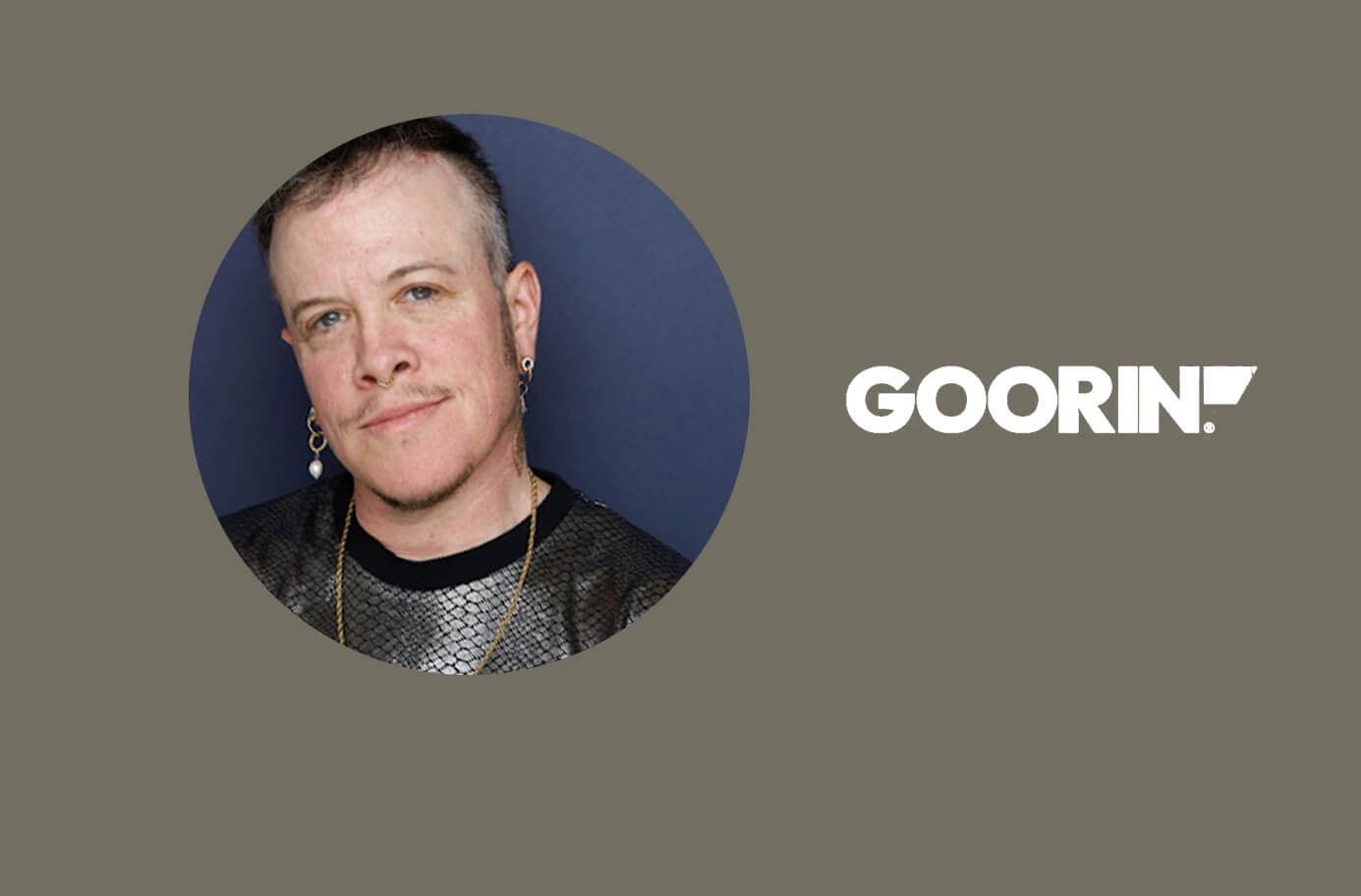
Latif Hamilton, Founder and CEO of SpiritHoods


Latif Hamilton is the Founder and CEO of SpiritHoods, a leading fashion brand known for its festival-inspired faux fur products. Under his leadership, SpiritHoods has generated over $50 million in revenue and achieved top-three search rankings across major product categories by strategically aligning product development with SEO. A creative entrepreneur at heart and fractional CMO, Latif specializes in bridging operations and design to drive exponential growth. He is also the Founder of The Growth Operative, a consultancy focused on brand growth and business development.


Here’s a glimpse of what you’ll learn:
- [2:35] Latif Hamilton explains the disconnect between product design and search-driven consumer demand
- [3:55] Building a data-driven product strategy using SEO tools and insights
- [6:30] How to identify untapped keyword opportunities with high demand and low competition
- [9:55] The importance of category depth and dominating one niche for SEO authority
- [10:53] Criteria for expanding into new product categories based on rankings and traction
- [17:22] Avoiding common SEO mistakes like overreliance on agencies and tools
In this episode…
Many ecommerce brands rely heavily on intuition and creativity when deciding what products to launch. While this approach can work, it often overlooks a valuable source of insight — how customers are actually searching online. Could aligning product decisions with search behavior lead to more consistent growth?
Latif Hamilton’s answer comes from his experience as a creative entrepreneur and fractional CMO, where he connects product development with marketing strategy. He explains that instead of guessing what customers want, brands should use tools like Semrush or Ahrefs to identify high-volume, low-competition keywords — and then design products specifically to match that demand. He emphasizes focusing on depth within a single category to build authority, aligning product naming with actual search behavior, and prioritizing long-tail keywords to capture niche opportunities. Latif also cautions against overreliance on agencies, encouraging founders to develop a working understanding of SEO so they can guide strategy effectively. Ultimately, growth comes from intentionally combining creative direction with validated demand signals.
In this episode of Minds of Ecommerce, Raphael Paulin-Daigle talks with Latif Hamilton, Founder and CEO of SpiritHoods and Founder of The Growth Operative, to discuss SEO-driven product development. Latif discusses strategies for aligning product design with search behavior, how to build authority by dominating a niche, and avoiding common SEO mistakes like agency overreliance.
Resources mentioned in this episode:
- Raphael Paulin-Daigle: LinkedIn | X
- SplitBase
- Latif Hamilton: LinkedIn | Instagram | Substack
- SpiritHoods
- The Growth Operative
- Semrush
- Ahrefs
Quotable Moments:
- “We were designing products with our customers in mind, but we were not necessarily designing our products with consumer demand in mind.”
- “We were not designing into pockets that we very easily could design into and capture the market share.”
- “It would be better for your company to own the entirety or as much of the faux fur coat world as you can.”
- “You ideally need to be in the top three positions without question if you want to really win.”
- “You cannot lead something you don't understand, and as entrepreneurs, it's not that we have to master every department.”
Action Steps:
- Use SEO tools to guide product development: This ensures you build products that match real customer demand rather than relying on guesswork.
- Target high-demand, low-competition keywords: This helps you capture market share faster and rank higher in search results.
- Focus on dominating one product category first: Building depth in a niche strengthens your authority and improves overall SEO performance.
- Align product naming with actual search behavior: Matching how customers search increases visibility and drives more organic traffic.
- Develop internal SEO knowledge instead of relying fully on agencies: Understanding the fundamentals allows you to make better strategic decisions and avoid costly mistakes.
Sponsor for this episode…
This episode is brought to you by SplitBase.
At SplitBase, we design, test, and manage high-converting landing pages and on-site experiences for fashion, luxury, and lifestyle ecommerce brands. Our optimization program pinpoints exactly where your store is losing money most, and then we help you fix that.
The result? Increased conversions and profits for our clients.
With our team of conversion optimization specialists, performance marketers, and conversion-focused designers, we've got your back when it comes to testing and optimization.
Request a proposal on SplitBase.com today, and learn how we can help you get the most out of your marketing spend.
You can find us on LinkedIn, Twitter, and Facebook. Don’t miss out on our exclusive podcasts at Minds of Ecommerce.
Episode Transcript
Intro: 00:06
Welcome to the Minds of Ecommerce podcast, where you'll learn one key strategy that made leading ecommerce companies grow exponentially. We cut the bullshit and keep the meat in a 15-minute episode. Founders and executives take us through a deep dive of a strategy so you get to learn and grow your online sales. In the last episode, we heard from Heather Roach, director of marketing at Original Footwear Company, and we talked about how brands can leverage SMBs for growth. Now today, get ready.
I'm chatting with Latif Hamilton, creative entrepreneur, fractional CMO, and founder of The Growth Operative. And of course, of SpiritHoods, which is the brand we'll be talking about today. Now, SpiritHoods has generated over $50 million in revenue, and a lot of their success comes from a link between product development and SEO, which really helped them rise to the top of search results. And that's exactly what we'll be diving into today. Now, I'm your host, Raphael Paulin-Daigle, and I'm the founder of SplitBase.
This is Minds of Ecommerce. Now this episode is brought to you by SplitBase. And at SplitBase we help leading eight and nine-figure brands such as Dr. Squatch, Hyperice, and Amika grow through customer-focused conversion optimization programs. We find out exactly where your store is losing money most, and then we help you fix it. The result reduced acquisition cost, increased conversions, higher AOV, and of course, well, more money, which in turn allows you to scale advertising profitably.
We've been at it for over a decade and can help you manage conversion optimization from A to Z. So go to splitbase.com today to request a proposal or even to get a free diagnostic. And you'll be able to learn how we can help you get the most out of your marketing spend. Alright, Latif, thank you so much for being here. Welcome to the show.
Latif Hamilton: 02:04
Yeah. Thanks for having me. It's great to be on.
Raphael Paulin-Daigle: 02:06
Yeah. Now, as you know, this podcast is all about going deep, right? And dissecting one key growth strategy so our listeners can get the most value right away. And you said something really interesting, which we haven't really touched on the podcast before, which is one of the strategies that really helped you grow. Was this the link between product development and SEO? So can you tell us a bit more about that so we have context?
Latif Hamilton: 02:35
Yeah, absolutely. You know, I think originally we were sort of, you know, so, so SpiritHoods, is it a fashion brand? Let's just start with that. And we do a lot of product development in a variety of categories. So I think coats could be house robes thrown.
We do, we do a lot of things. And you know, for a long-time we were designing products with our customers in mind, but we were not necessarily designing our products with consumer demand in mind in the same way. And so, you know, I think that there's a lot of tools out there that can help you expand your outreach. You know, and build on your existing foundation, and allow you to expand out and design in a way that both serves your audience and also brings in a whole bunch of brand new customers. And I think a lot of times, at least when we're doing things on the consulting side, for example, we notice that brands can kind of miss this link, you know, and a lot of times that stems because it stems from marketing being disconnected from your design or development, you know, and this is where that communication really needs to take place to elevate, you know what I mean?
Raphael Paulin-Daigle: 03:42
So how do you find that link? Like, you know, let's say I'm a brand. I'm like, okay, you know, we have this approach for product development, but we want to make it a bit more data-driven. We want to, we want to do what you're talking about. How do we approach that?
Latif Hamilton: 03:55
Yeah, I mean, you know, one of the things I think is interesting is sometimes we can have an overreliance on agencies, and agencies can gatekeep sometimes. You know. And so if you're working with the right agency, that's not necessarily an issue. Or if you're working with the right consultancy, it's not necessarily an issue. But when there is gatekeeping or a lack of knowledge, you can be severely inhibited or limited in your processes.
And so for us, it looked like it looked like essentially, you know, our SEO agency was just not doing a great job. And after a period of time, I realized that I needed to take this into my own hands. And we were spending a reasonable amount of money and not getting nearly the results that I had, I had anticipated or assumed were possible based on our conversations between us and the agency. So I just decided, you know what? I'm going to take all these matters into my own hands.
And in doing that, as the product developer and lead designer, right, I realized, you know, there was a fundamental disconnect between what they were trying to achieve, which is, as an example, was to get us ranked for the term, you know, faux fur coat. Let's just start with that. Or women's faux fur coats, right. Or men's faux fur coats. And there was a disconnect in the awareness of what was possible or low-hanging fruit for us.
What was the long-term play? Right. Because depending on how hard it is to get ranked on Google for some of these search terms, you know, of course, you've heard long tail keywords and things like that. But when you're when you're. And those are easier to rank for than some of the, some of the smaller, so long tail keywords are like, you know, a black faux fur coat instead of faux fur coat, right?
So you're getting longer in your description, men's black faux fur coat. But what we discovered was that we were not designing into pockets that we very easily could design into and capture the market share for that particular product, whether it be yellow like yellow faux fur coat, tons of searches. And when you look at the demand, the demand was high, but the amount of products out there was very low. So when you're doing a little research on SEMrush or Ahrefs, these are tools that I think are absolutely necessary for any business owner. You know, it's not super complex.
You can watch some videos and get a grasp of it pretty quickly, or work with somebody to get a better understanding of how your SEO is working or what those search terms mean. But there's a simple process of saying, okay, you know, we're already designing coats, for example. Let's lean into yellow, green, purple, because those are the ones that have a high enough search volume that it makes sense for us to go after that in terms of new customer acquisition. They vibe with our brand because we like color anyways. We geared towards designing festival inspired products anyways, so color works for us.
You know, so we're meeting some benchmark foundational elements along the way as we're deciding what we're doing in product development, and we're assessing what people are searching for and designing into exactly what people are searching for. And there's something that happens in the SEO world that is like, that is interesting because if you own, I don't want to say own, but if you're, if you're producing enough products, if you're creating enough products in one category. So let's say faux fur coats, we have tons of faux fur coats, so you only have more. You only gain more advantage by producing more products in that same category. And so as you're expanding out, right, rather than let's say, you know, we jump into making backpacks, right?
That's a departure. It would be better for your company to own the entirety or as much of the faux fur coat world as you can before you expand into another product category, at least when you're looking at it through the lens of SEO. So, you know, for us, it was really about understanding how to name our products, right? We used to name them incorrectly based on search, you know, for example, simple things, you know, men's faux fur coats, you know, men typically don't, don't, they don't use an apostrophe when they write men's. The correct, correct way to do that is men's faux fur coat with an apostrophe.
But they don't do that. So when we were designing our product names, we didn't use an apostrophe. On the flip side, do women? Women use an apostrophe? There's more searches for women's faux fur coats.
So we're paying attention to what Semrush and what these platforms are telling us that is searchable, that is being searched regularly and at a high enough demand for us to care. And then we design those products. And that, in a nutshell, is exactly what you're doing. And as long as you already have the product category itself, like we already do faux fur coats, expanding into a highly searched, low supplied product is going to work out. It's going to do wonders for your brand and it's going to help you garner tons of organic traffic over the long run.
And that only elevates the rest of your company. Every single thing you do from there, like let's say you own once we own faux fur coats and we do, we're in the top three positions. You know, once you have that, when you launch another product line, like the backpacks or the sweatshirts or whatever, you're going to have a much easier time ranking on the first page than when you have none of them. When none of your product categories. You've done any work to build a foundation in SEO.
So, you know, really that's the link, the product development, designing within that framework of saying, what are the consumers looking for the people that we haven't tapped into? And also usually that blends with your existing customer base. So it's not like a far departure. Do you know what I mean?
Raphael Paulin-Daigle: 09:31
Totally. And this is amazing. Like, I think just to kind of recap for our audience as well, right? Like there are so many ways to apply this. Like one, there's looking at volume and looking at what are, what are people actually searching for that's related to my products, right?
Based on volume, you prioritize product development or you help prioritize product development using that as a quantitative support.
Latif Hamilton: 09:55
100%.
Raphael Paulin-Daigle: 09:56
Number two It is also deep, right? Instead of just, you know, targeting everything, really try to dominate one category, one long tail keyword instead of just going in every other direction. And then finally, I think if we kind of zoom it down or zoom in, I should say there's the details such as, what are precisely people writing and is our technical architecture of the site, the naming convention, everything fitting with that? I do have a question. When do you know that it's the right time to move into a different product category?
So for example, you said, you know, let's say you target yellow faux fur coats, right? When will you decide that you've created enough yellow faux fur coats to, you know, justify moving on to the red category or to something entirely different?
Latif Hamilton: 10:53
Yeah. Well, it depends on a few things. It depends on how much competition is in that. So, for example, yellow faux fur coats versus red faux fur coats. I can tell you right now there's going to be more competition in a red faux fur coat or a pink faux fur coat.
So, you know, so it sort of depends, you know, I think you're if you're already making faux fur coats, as in our, as in our situation, and we already have black, gray, we already have the basics covered no matter what. Sure, there's a lot of competition on the organic search side for that, but that's not always the concern, right? We're sort of blending these two worlds, what our customer base is going to want, what people coming to the site. Naturally they're going to want what we can target for, you know, SEO, what we can target as new customer acquisition. So, you know, you're kind of blending between, you know, within that product category of faux fur coats, you're saying, okay, what makes the most sense for us?
And blending that with what, you know, in terms of color, maybe yellow is not going to work. Maybe you're more contemporary and a lavender, but even that doesn't name your coat lavender, most likely, because probably no one's searching for the lavender faux fur coat they're searching for. You know, light purple faux fur coats. So you're sort of really getting granular with it. And you're also assessing it based on, you know, how difficult it is to achieve a first page for that, right?
And you can look at these tools and they can pretty much tell you, they say, you know, the search volume is 100,000 a month, but it's, it's, it's impossible to rank for, right? So you're not, there's just no point in starting there. You know, you could get there, but you don't want to start there. And then when it comes to switching out completely from that category, you know, generally I would say if you're on the, it doesn't really matter in my experience to be even on the first page of Google, you need to be in the top five positions, right? And now with AI, you really have to think about it.
It's even worse. You ideally need to be in the top three positions without question. And so if you can be in the top three positions, because AI is basically changing the fabric of how SEO originally was, was structured and how it benefited people, it still is there. SEO is still very valuable. It's just that there is another main, overarching position that AI is holding at the top.
And so that pushes you down a little bit. And that's something you have to think about now, which you didn't have to do just a year and a half ago. So, you know, and then there's a whole other conversation about how to get, you know, featured in AI. And that's another story for another time. But this is still very relevant when it comes to designing your products and understanding, you know, whether or not you can achieve a ranking in the top three, top four, you know, and, and there are other elements that, that go along with being able to do that, you have to have good foundational SEO.
You know, that is an important part of it. And you don't want to use blackhat tactics or things that are aggressive, you know, maybe work short term, but are bad in the long term. But if you're going to switch out from one product category. So for us, we have faux fur coats. And let's say we wanted to launch another category.
Well, we want to launch a product category that's going to ideally have the word faux fur in it as an example. So maybe we're going to do faux fur booties. Maybe we're going to do faux fur. You know, headwear. Maybe we're going to do it.
And the reason for that is because again, we already have traction and whatever our dominant product category is for us, let's call it faux fur coats. We're going to want to use the weight and power that that term already has, that Google's already saying, hey, they are experts in faux fur. And on top of that, our blog content is talking about faux fur. It's talking about the different types. It's talking about good versus bad.
It's talking about real versus fake fur. So we're really trying to own that product or category across, across. And a lot of entrepreneurs, they don't have 25 different product categories. And we have a lot. We're a fashion brand.
We have booties, we have bodysuits, we have coats, we have headwear, we have house robes, we have throws. We have faux fur throws, by the way, important because they're faux fur. I don't just make regular throws because we dominate the product. The overarching term of faux fur, right? So even the house robes, we dominate faux fur.
House robes because we have faux fur on them now we don't dominate, you know. The other just standard house robes or, or luxury house robes. So we're sort of aggregating these together. We're sort of combining them together to help elevate the brain in its entirety across multiple product spectrums. And if you do that, right, if you're like you said, the naming convention, which we touched on earlier, if you're naming your products correctly, if you're thinking about what next product category you want to design, because it's not about as a designer, we want to design what we want to design.
Even if you're a product guy and it's some different industry, let's say it's a cell phone case or something, right? The thing is, we want to design and develop what we're inspired to do, but we have to blend that with, with the operational, logistical, data-oriented things that are going on within the company or surrounding the company. So that would mean blending your desire to design something. But does it mesh or match with what is possible for you to do? To garner in terms of new customer acquisition.
Latif Hamilton: 16:08
In terms.
Raphael Paulin-Daigle: 16:08
On the right. And those. Yeah, that is fundamental to success. And that's where creativity can be a little misguided. You know, when we go too far in the artistic direction without paying attention to the structural elements of marketing.
And so that's kind of the, that's kind of the trade-off that we have to do. It's a trade-off between what we love and are passionate about creatively and what operationally makes sense, right?
Raphael Paulin-Daigle: 16:32
Yeah. I think the biggest difference that I'm seeing between your approach and I think what I more often than not see when it comes to SEO, right, is people are looking at SEO as just simply a traffic acquisition, right? A marketing channel. What I'm hearing here is that it's not just a marketing channel. It's also, you know, what helps you decide what there's demand for.
It helps you validate the market. It helps contain creativity. Maybe in the way that you've said it right. And make sure your creativity will actually pay off. So I love how you're using that.
Latif Hamilton: 17:10
Well said. Yeah. Yeah, you said it exactly, exactly right.
Raphael Paulin-Daigle: 17:12
I'm curious here if there's like, are there any mistakes that, you know, people do with this approach? Like, is there like an easy faux pas that people could fall into?
Latif Hamilton: 17:22
Oh, yeah. I mean, there's a lot. SEO is a little tricky. You know, my recommendation is always to try to at the very least, consult with somebody who can guide you. And, you know, I really believe that you cannot lead something you don't understand.
And as entrepreneurs, it's not that we have to master every department. Right? But we do need to have fundamentals. We need to understand fundamentally how something works so that we can command it. We can lead it.
We can, we can, we can determine, you know, what the next move is. So, you know, I think without question. One easy mistake to point out is, is it not reliant on either an agency or, you know, some tool or some software, right? Generally speaking, when you have some sort of general software that can just go in and make all these changes, well, there's usually problems with that. There's usually a reason that it's inexpensive, you know, and quick.
It's a quick fix and it just doesn't hold. It just doesn't hold the candle. So I would say overreliance on, you know, someone else because you don't, you're too inundated or busy to explore some of the fundamentals. And it's really not that hard. You just dedicate, you say, hey, I'm going to take six months and I'm going to watch some videos, I'm going to learn.
And what I did is I actually just consulted with SEO agencies and I didn't hire them. I did not hire them. What I did is I consulted because when I hired them, I found that there was some gatekeeping going on. And this isn't the case everywhere. You know, there can be some good agencies.
But, you know, I found that they were gatekeeping and I found that they really didn't understand the link between product development and design and SEO. They were not doing it that way. What they were doing was just blanketing generalizations around what your, what my industry was and what types of keywords we wanted to rank for. They didn't really understand the fundamentals on how to go about doing that. And the approach really starts with product design and development, because if you don't have enough products, you're not in a particular category.
You're it's unlikely that you're going to be in first position on Google. Google's not rewarding somebody who has one faux fur coat. The rewarding somebody who has 50 faux fur coats, do you know what I mean? So that's the difference. So how are you thinking about your next product launches, etc.?
So there can be some mistakes for sure. But I think the greatest mistake is not diving in and exploring it yourself and looking at your company or talking or consulting with somebody to learn, at the very least, what it means to have good product development integrated with SEO. And to be honest, you're saying you haven't heard a lot of this? I also haven't heard a lot. This is my own journey.
Having to, as an operator be like, look, how do we make this better? How do we, how do we, we're not getting the results. And I think, you know, taking it into your own hands as an entrepreneur can work out well.
Raphael Paulin-Daigle: 20:21
Yeah. And I think this is the type of strategy that I. Correct. Don't hear from DTC brands. You know who I hear this from, you know, affiliate marketers from way back in the days, right?
Yeah. Those were the guys that just, you know, had this kind of method for evaluating demand and everything. And it's really interesting to just hear it applied, you know, more to like a modern DTC version of it. And I think a lot of DTC brands could, you know, benefit from this. So thank you so much for sharing this.
We've been talking with Latif Hamilton. Now Latif, if people want to hear more about you, about SpiritHoods, where should they go? What should they do?
Latif Hamilton: 21:04
Yeah. I mean, you know, if you're curious, you know, I do a lot of behind the scenes, kind of behind the curtains on SpiritHoods for just for fun, really on Substack. I kind of have been building out, you know, weekly articles that kind of dive into different ways entrepreneurs can think about their business and using real-world examples of challenges that I, that I've been through. And so I think that can be helpful if you're wanting to just read something consistently, if you like the way I'm thinking. And alternatively, if you want to just check out spirithoods.com, you can just take a look at what we do there.
And then The Growth Operative growthoperative.com is where I do a lot of consulting. So if you're wanting to reach out and get some information on how to consult, you just go to growthoperative.com and connect with me there.
Raphael Paulin-Daigle
Latif Hamilton: 21:54
Amazing. Latif. Thank you so much.
Latif Hamilton: 21:56
Yeah. Thank you. It's been a pleasure.
Outro: 22:02
All right. Well, that's it for today's episode. And thank you so much for tuning in. Now, if you like what you've heard and you don't want to miss any of the new episodes that are about to come out, make sure you subscribe to the podcast, and well, bonus points if you also leave a review in the iTunes store or wherever you're listening to this. Now, if you're working on an ecommerce store that does over $1 million in revenue and you need help with conversion optimization or landing pages, well, I've got some good news because there's a pretty good chance we can help with that.
Go to splitbase.com. Come to learn more or even to request a proposal. If you have any guest requests, questions, or comments, tweet me @rpaulindaigle, and I'll be super happy to hear from you. And again, thanks again for listening. This is the Minds of Ecommerce.